
Winter in Ontario is not one trip. It is five different weekends, and the right one depends on what you want the cold to do for you. Ski runs and a buzzing village. Three million lights over the most famous waterfall in the country. A ribbon of ice through a silent forest. Wineries with the tasting room all to yourself. A whole capital city turned into a skating rink. This is the season overview: five deep winter getaways from Toronto, running from the Niagara lights switching on in mid-November 2026 through Winterlude’s final weekend in mid-February 2027. Every date below was verified against its organizer or official source, and where a date or price had not been published yet, we say so instead of guessing. If you want the budget math for these same trips, start with our Cheap Winter Weekend Getaways in Ontario — this guide is about where to go, when, and what the weekend actually feels like.
One thing before the list: winter in Ontario rewards the early decision. The ski hill opens on a fixed day, the ice trail opens when the ice says so, and the Skateway opens when the cold has done its work. The trips below are ordered by when they come alive — Blue Mountain and Niagara first, Muskoka and the County through the deep winter, Ottawa to close the season — so you can book the season in order instead of scrambling in January.
1. BLUE MOUNTAIN & COLLINGWOOD — ONTARIO’S BIGGEST SKI WEEKEND
Blue Mountain is the obvious first trip of the winter, and it earns it. Ontario’s biggest ski resort opens its 85th winter season on Thursday, December 10, 2026, with the first lifts at 8:30 AM. There are 43 trails, and 30 of them are lit for night skiing, which is what makes Blue Mountain a weekend rather than a day trip: you can ski the morning, eat in the Village, and be back on the hill under the lights after dark. The season typically runs into late March or April depending on snow, so the hill is there all winter — but the opening weeks are the moment, before the holiday crowds arrive and while the snowmaking is fresh.
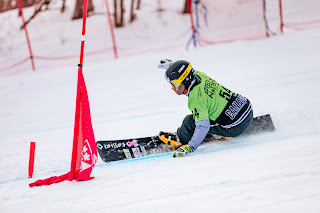
Photo: Uni.d.Marjorie, CC BY-SA 4.0, via Wikimedia Commons
Off the slopes, the Village at Blue is the other half of the trip. It is a pedestrian village at the base of the hill — shops, restaurants and pubs you walk between in your boots — and in winter it lights up: the light walk around the Village pond strings the trees in colour, and the holiday lights run through the season. The Ridge Runner Mountain Coaster runs all year, weather permitting, if you want speed without skis. And the split-group move that saves a Blue Mountain weekend is Scandinave Spa, a ten-minute drive away at 152 Grey Rd 21: skiers take the first lifts while non-skiers book a morning in the thermal baths. The spa is open daily 9:00 AM–10:00 PM, and pricing is date-dependent, so check your date before you go. One honest note on the gondola: the open-air gondola’s published season ran daily through November 1, 2026, and its winter schedule had not been posted when we checked — check the resort’s hours page before counting on a scenic gondola ride in winter. The mountaintop views are real either way; the gondola is just not a promise yet this winter.
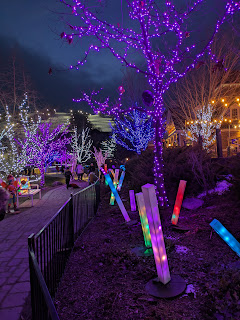
Photo: Makeworldpedia, CC BY-SA 4.0, via Wikimedia Commons
Where to stay and eat
Stay in a Village condo if you can — you walk to the lifts, you cook one dinner in, and the kitchen is what keeps a ski weekend affordable. The Village hotels and the lodges around the base cover the rest, and Collingwood, ten minutes south, has quieter inns and the best dinner tables in the area. Eat in the Village on the first night for the atmosphere, then drive into Collingwood on the second: the town’s restaurants are better value and you will actually get a table.
Getting there and the best time to go
About two hours northwest of Toronto, up Highway 400 and across on Highway 26 — an easy Friday-evening drive if you leave before the cottage traffic. The best time to go is midweek in January or February, when the hill is calmer and the Village is cheaper; the busiest times are the winter holidays from December 21 to January 1, Family Day weekend (Family Day is Monday, February 15, 2027) and March Break, March 15–19, 2027. Book by December 1, 2026 and the resort’s Back to Winter offers still apply to stays from opening day through March 31, 2027. For the full mountain plan — lifts, Village, spa and the money-saving moves — see our Blue Mountain Ontario: Your Complete Winter Weekend Guide for 2026–27. Check lift and trail status on bluemountain.ca before you drive.
2. NIAGARA FALLS IN WINTER — THREE MILLION LIGHTS AND THE FALLS THEMSELVES
Niagara Falls in winter is the cheapest big night out in Ontario, and it starts before the snow does. The Winter Festival of Lights switches on Saturday, November 14, 2026 — the 44th year, three million lights along an 8 km route through Queen Victoria Park, Dufferin Islands, the Fallsview District and Lundy’s Lane, lit every night from 5:00 PM to midnight, free. Opening night is the one to go for: the ceremony starts at 6:00 PM at the Queen Victoria Place Festival Hub, the tree lights up at 7:30 PM with Santa, and fireworks go off over the Falls at 8:00 PM. The fireworks run every Friday and Saturday at 8:00 PM through December 12, then every night from December 18 to January 2, with a final pair of shows on January 8 and 9 and a nine-minute midnight show on New Year’s Eve. The festival closes Sunday, January 10, 2027.
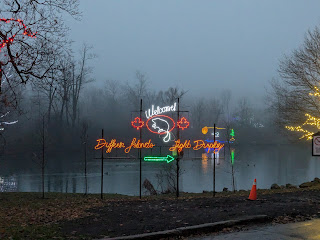
Photo: Hannah Clover, CC BY-SA 4.0, via Wikimedia Commons
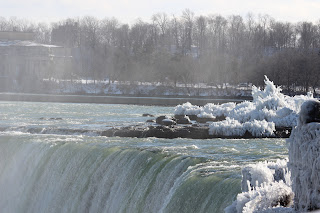
But the lights are only half the trip, and the Falls are the other half — in winter they look nothing like summer. The mist freezes on the rocks and the gorge walls, the ice builds up along the river, and the Falls themselves are illuminated in colour every night from 4:30 PM to 2:00 AM through December. Walk it from the top: Queen Victoria Park first, then Dufferin Islands, which is the quietest and prettiest stretch — the displays reflect in the ponds and it is where the festival feels least like a crowd. And go inside the Falls while you are there. Journey Behind the Falls, from Table Rock Centre at 6650 Niagara Parkway, is open year-round: the tunnels and portals behind the Horseshoe Falls stay open all winter, and the ice formations in the tunnels are a genuinely different view. Two honest caveats — the lower observation deck closes for ice, typically from mid-December to mid-April, and winter admission is reduced to reflect that; and the hours are set week by week, roughly 9:00 AM to 5:00 or 6:00 PM in the depths of winter, so check the Niagara Parks hours page for your day. The Maid of the Mist is closed for the winter (its 2026 season ended November 8), so do not plan around the boat. Warm up on the Hot Chocolate Trail — the Cinnamon Bun Hot Chocolate at Queen Victoria Place Café and Table Rock House Restaurant — and you have the shape of the night.
Where to stay and eat
This is the cheapest season in Niagara Falls, and it is worth staying the night instead of driving home after the fireworks. Off-season hotels start from about $72 a night, with the Lundy’s Lane strip the cheapest cluster — the full verified prices are in our cheap-getaways guide. Eat on Lundy’s Lane too, or walk ten minutes off the Fallsview strip: the restaurants closest to the Falls are priced for tourists, and a family dinner runs far cheaper one street over. Pick a hotel with parking included and leave the car there; parking near the Falls on fireworks nights is the one cost that surprises people.
Getting there and the best time to go
About 90 minutes from Toronto by car down the QEW, or GO Transit to Burlington and a connecting bus. The best time to go is opening weekend, November 14–15, for the ceremony and the first fireworks; December evenings for the full lights with the town dressed for Christmas; and early January for the quietest version, when the crowds thin but the lights are still on until January 10. If you only go once, go on a Friday or Saturday so you catch the 8:00 PM fireworks — and leave at 9:30 PM to beat the QEW rush home. Festival details are on niagaraparks.com, where the Journey Behind the Falls hours are posted week by week.
3. MUSKOKA — THE ICE TRAIL THROUGH THE FOREST
Muskoka in winter is the opposite of Muskoka in summer: no traffic, no lineups, and the lakes frozen hard enough to walk on. The trip is built around one thing — the ice skating trail at Arrowhead Provincial Park, 7 km north of Huntsville off Highway 11. It is a 1.3 km ribbon of ice that winds through snow-draped forest, not a rink: trees on both sides, corners you have to steer through, and on Fire & Ice Nights the whole trail is lit by tiki torches with music at the trailhead. It was the first trail of its kind in Ontario when it opened in 2012, and it is still the single most famous winter attraction in Muskoka.
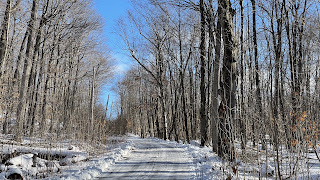
Photo: Ajshul, CC BY-SA 4.0, via Wikimedia Commons
Here is the part that matters most, said plainly: the trail is weather-dependent and no opening date has been announced yet for this winter. It opens when the cold has done its work, usually in January — sometimes late December — and it stays open through February into early March while the ice holds. Day skating runs 9:00 AM to 5:00 PM once it opens, and Fire & Ice Nights run Friday and Saturday nights from late January, 6:00 to 9:00 PM, weather permitting. That means you do not book a Muskoka weekend around the trail in November. You watch the Ontario Parks Snow Report — updated daily at 9:00 AM — and the park’s automated line (705-789-5105), and you go when the trail is open. You also need a daily vehicle permit, reserved online up to five days ahead from 7:00 AM; on busy winter weekends permits sell out, and without one you may be turned away at the gate. Fire & Ice Nights need their own permit. It is a little bit of admin for the best skate in Ontario, and it is the difference between skating and driving home.
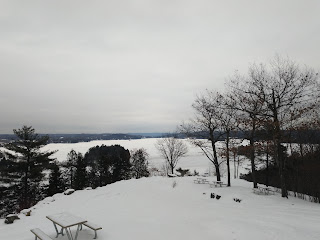
Photo: Wolfy13399, CC BY-SA 4.0, via Wikimedia Commons
Around the trail, the weekend fills itself. Arrowhead’s cross-country ski trails typically open from mid-December, and there are more than 8 km of snowshoe trails in the park. Stay in a four-season cottage — the Muskoka winter stay is a fireplace, a sauna or a hot tub, and a lake you can see from the window — and spend the non-skating hours the slow way: the lookout over frozen Fairy Lake in Huntsville, the cranberry country around Bala with the marshes under snow, and downtown Huntsville’s cafés and restaurants, which are all yours in winter. This is the quiet trip on this list, and that is the point: you come to Muskoka in winter for the silence as much as for the skate.
Where to stay and eat
Book a cottage, not a hotel — the fireplace-and-sauna cottage is the Muskoka winter, and the small resorts and rental cottages around Huntsville and the big lakes are built for exactly this. Eat in Huntsville: the downtown restaurants and cafés stay open all winter and you will get a table without a reservation on most nights. Pack a thermos for the trail — there is nothing like hot chocolate at the trailhead after an hour on the ice.
Getting there and the best time to go
About two and a half hours from Toronto, up Highway 400 and Highway 11 to Huntsville. The best time to go is mid-January through February, once the trail is open and the Fire & Ice Nights are running — but check the Snow Report the morning you leave, and have a backup plan (ski trails, snowshoeing, the lookout) in case a warm spell closes the ice. Go midweek if you can: the trail is calmest on weekdays, and the permit is easiest to get. Trail conditions are posted by Discover Muskoka at discovermuskoka.ca.
4. PRINCE EDWARD COUNTY IN WINTER — WINE COUNTRY WITH THE CROWDS GONE
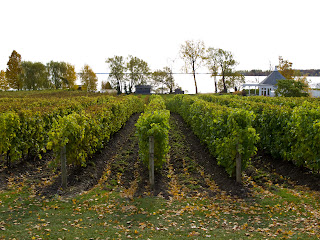
Prince Edward County in summer is a lineup. In winter it is yours. The County’s 41 wineries shrink to a quieter rhythm: 36 of them stay open through the winter, most with modified hours — often 11:00 AM to 5:00 PM, some weekends only — and the tasting room you would have shared with forty people in July has three people in it in January. That is the whole pitch: cool-climate Pinot Noir and Chardonnay, the limestone soil that makes the County taste a little like Burgundy, and a winemaker who has time to talk. Check each winery’s hours before you drive — the smaller producers close from December to February — but the big names keep their doors open, and the winter tasting is the better one.
Waupoos Estate Winery in autumn, 2009
Photo: Gary J. Wood, CC BY-SA 2.0, via Wikimedia Commons
Time it for late November and you catch Wassail, the three-weekend celebration where the wineries toast the vines before winter, with tastings and festive rooms — the County’s real start to the season. After that, the County turns to its outdoor winter: Sandbanks Provincial Park, famous for its beaches, becomes a different place entirely. The beach facilities are closed and nobody is swimming, but the park stays open for winter walks, and the Dunes Trail and the park’s roughly 10 km of multi-use trails are made for cross-country skiing and snowshoeing — the dunes under frost at sunrise are worth the early start alone. One honest note: day-use roads and parking inside the park may be closed in deep winter, so plan on parking at the entrance and exploring on foot. Sugarbush Vineyards rents snowshoes for a trail through its vineyard, ending with tastings, hot chocolate and cookies by the fire — the County in one afternoon.
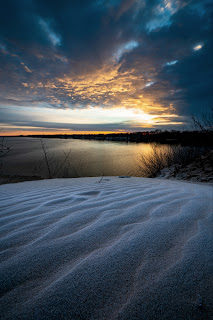
Photo: Jasonpettit, CC BY-SA 4.0, via Wikimedia Commons
Where to stay and eat
Stay in Picton or Wellington: the inns and bed-and-breakfasts stay open all winter, the rooms are cheaper than summer, and you can walk to dinner. The restaurants in both towns stay open year-round, which is more than you can say for most wine country in February. Eat where the locals eat — the main-street dining rooms in Picton are the County’s winter living room — and buy a bottle at each winery to take home, because the tasting fee is usually waived with a purchase and the bottle is the souvenir that lasts.
Getting there and the best time to go
About two hours from Toronto via Highway 401 — the easiest drive on this list, and the best one for a single-night trip. The best time to go is December, for Wassail and the first snow, and January through February for the quietest tasting rooms and the best Sandbanks snow. Go on a weekend if you want the wineries at their fullest hours — several are weekends-only in winter — and call ahead on a weekday visit, because winter hours change by producer. The County’s winter picks are listed at myprinceedwardcounty.com.
5. OTTAWA — WINTERLUDE AND THE WORLD’S LONGEST SKATING RINK
Save the biggest trip for the end of the season. Winterlude, Ottawa’s winter festival, runs January 29 to February 15, 2027 — the 49th edition, three weekends across Ottawa and Gatineau, and free. It is Canada’s capital celebrating winter properly: the ice-carving exhibition at Confederation Park, where the sculptures stand in the Crystal Garden; the Snowflake Kingdom snow playground at Jacques-Cartier Park across the river in Gatineau; concerts, family activities and winter events all over the downtown. The festival dates are confirmed by Canadian Heritage itself, and the 2027 program is still being announced — check the official page closer to January for the line-up.
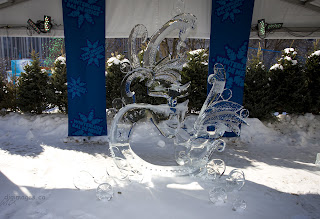
Photo: Michel Rathwell, CC BY 2.0, via Wikimedia Commons
And then there is the Skateway. The Rideau Canal Skateway is 7.8 km of maintained ice through the middle of Ottawa — the world’s largest naturally frozen skating rink — and skating on it is free. It runs from downtown to Dow’s Lake, past the parliament buildings and under the bridges, and it is the most Ottawa thing you can do in winter: skate to work, skate to lunch, stop for a BeaverTail from a hut on the ice. But say this plainly too, because it matters: the Skateway opens only when the ice is thick enough, and its opening is separate from Winterlude. It typically opens in mid-January and runs into early March, and no opening date has been announced yet for this winter — the National Capital Commission posts daily ice conditions, and you check them before you travel. A Winterlude trip does not guarantee skateable ice; a warm January can delay it, and a cold one can open it early. Skate rentals are available from the huts along the canal if you do not bring your own. Even if the ice is not ready, the sculptures, the snow playground and the city itself are worth the drive — but if the Skateway is the reason you are going, check the NCC conditions the morning you leave.
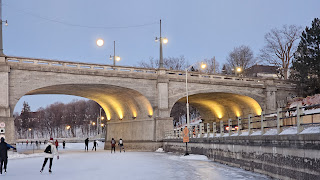
Photo: Mike Gifford, CC BY-SA 4.0, via Wikimedia Commons
Where to stay and eat
Stay downtown, within walking distance of the canal and Confederation Park — the ByWard Market and the streets around Elgin have the hotels, and you want to be able to walk to the Skateway in your skates. Eat in the Market: it is Ottawa’s food neighbourhood, and it runs all winter. And eat a BeaverTail on the canal if the Skateway is open — the Ottawa-born pastry, hot from the fryer onto the ice, is the city’s signature winter snack and it costs less than lunch.
Getting there and the best time to go
About four and a half hours from Toronto by car via Highway 401 and the 416, or VIA Rail to Ottawa station if you would rather not drive in February. The best time to go is a Winterlude weekend — January 30–31, February 6–7, or the Family Day weekend of February 13–15, 2027, when the festival closes on the Monday holiday. Go for two nights if you can: one day for the festival and the sculptures, one day for the Skateway, and a morning in the Market before the drive home. Festival dates and program are on canada.ca/winterlude.
WHICH TRIP FITS YOUR WEEKEND?
Pick by the weekend you have, not the one you wish you had. One night and a short drive: Niagara Falls for the lights, or Prince Edward County for the wineries — both are under two hours and both work as a Saturday out and a Sunday home. A full weekend with energy to burn: Blue Mountain, for the ski-plus-village combination nothing else on this list matches. A quiet weekend, just the two of you: Muskoka, for the ice trail and a cottage fireplace — but only once the trail is open, so watch the Snow Report before you book. And the big one, the trip you plan a month ahead: Ottawa for Winterlude, the furthest drive and the fullest weekend, with a festival, a skating rink and a capital city in the snow. Two of these trips also pair well: Niagara on a Friday night and the County on a Saturday is a long weekend that covers lights and wine in one drive, if you do not mind the mileage. Whatever you pick, the rule for this winter is the same — check the ice, check the hours, and book the room before the weekend you want disappears.
BEFORE YOU GO
Winter trips in Ontario have one honest complication: the best ones depend on the weather, and the weather does not keep a calendar. The ski hill opens on a fixed day, December 10, 2026, but the ice trail and the Skateway open when the ice is ready, and no one can give you that date in November. So make the check part of the plan: the Ontario Parks Snow Report for Arrowhead, the NCC’s daily conditions for the Skateway, the resort’s hours page for Blue Mountain’s gondola, and each winery’s hours in the County. Book the daily vehicle permit for Arrowhead the moment you know your date — it sells out. Book Village stays and Ottawa hotels early for the Winterlude weekends. And confirm hours the week you travel, especially for ticketed attractions, where prices were not published and we have not guessed them. The season runs November 2026 through February 2027, the trips are all there, and the winter is long enough to do all five — one weekend at a time.
Been somewhere amazing? Share your tips and experiences in the comments or on our Share Your Tips page — the best reader suggestions get featured as Community Picks!
Leave a Reply