
5 Hidden Gems of the GTA That Feel Like Another World
You don’t need a plane ticket to leave this world. You only need to know where the doors are. They’re hidden in plain sight across the Greater Toronto Area — a marble ruin dreaming in a Scarborough forest, a Kyoto garden breathing behind a Mississauga shopping district, a symphony you can walk through on the waterfront, a steel dome that once touched a black hole, and a cliff where thousand-year-old trees grip the edge of deep time. Five places. Five other worlds. All within an hour of your front door.
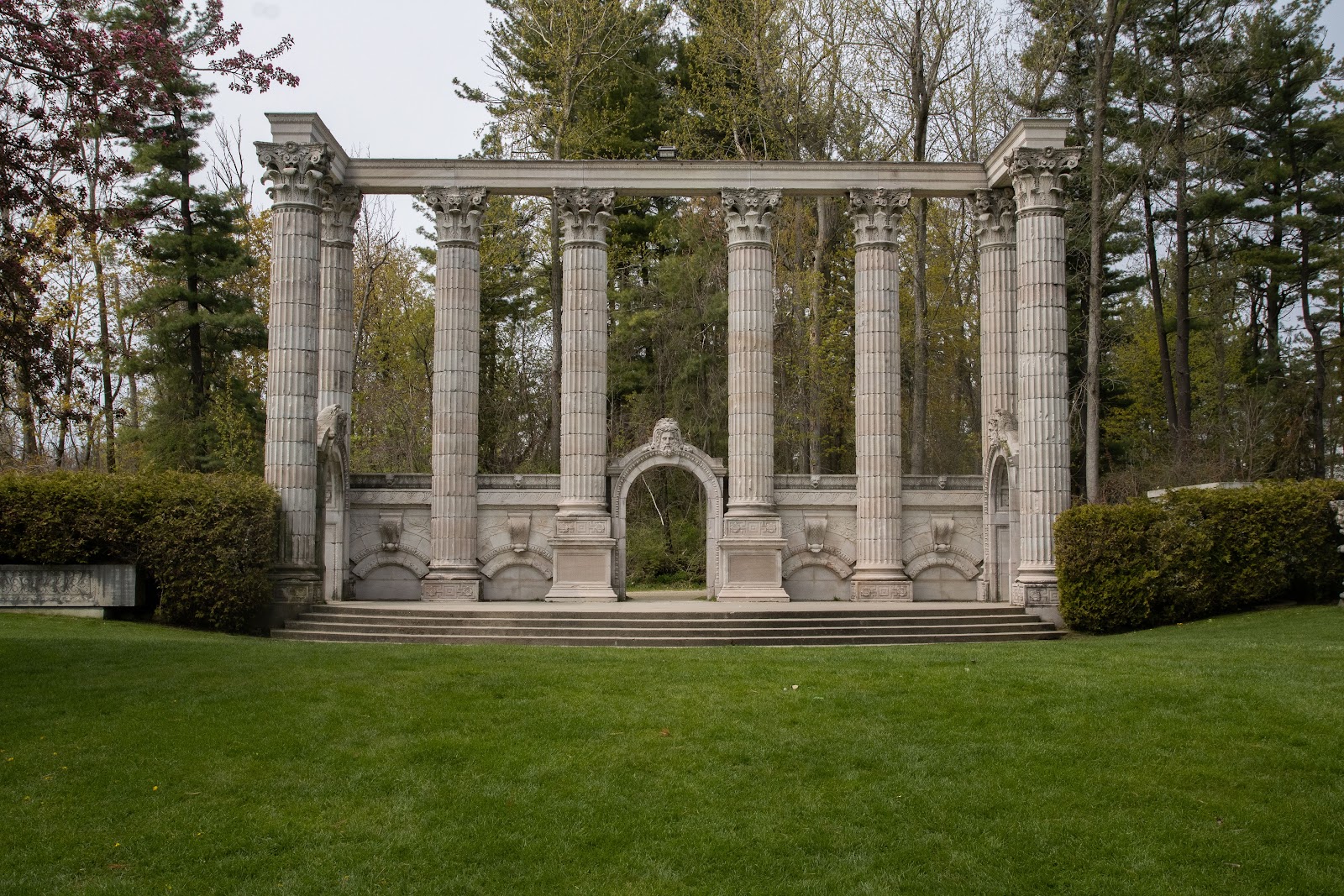
1. Guild Park & Gardens, Scarborough — Ruins in the Forest
Close your eyes and listen: leaves hissing in the wind, a woodpecker’s Morse code, your own footsteps soft on the path. Now open them — and you’re somewhere else entirely. A fluted marble column rises out of the ferns like a bone of some buried giant. Through a carved stone archway: nothing but sky. And there, climbing a grassy hill in perfect stone tiers, a Greek theatre waiting two thousand years out of place. The forest has been trying to take it all back for decades, and honestly? Let it try. The moss only makes it more beautiful.
This is the strangest love story in Toronto. In the mid-20th century, as the wrecking balls swung through downtown’s old financial core, art patrons Rosa and Spencer Clark did something extraordinary: they rescued the city. More than 70 architectural fragments — columns, archways, facades — were hauled to their 88-acre Scarborough estate at 201 Guildwood Parkway and set among the trees like treasure. The crown jewel is the Greek Theatre itself, reassembled stone by stone from the circa-1912 Bank of Toronto building that once stood at King and Bay. Every path here ends in a surprise. Every ruin has a downtown address in its past life.
What to do there
Wander with no destination — that is the entire activity, and it is perfect. Come at golden hour when the light pours through the columns like honey. Come in winter, when snow settles on the marble and the whole park goes silent and silver. In summer, the Guild Festival Theatre performs on the Greek stage, so you can watch living actors on a resurrected stage. Bring a camera, bring a picnic, bring someone you want to impress.
Good to know
Admission is free, and the park never closes its spell. Pair it with the nearby Scarborough Bluffs for a full day of asking yourself, out loud, “how is this Toronto?”
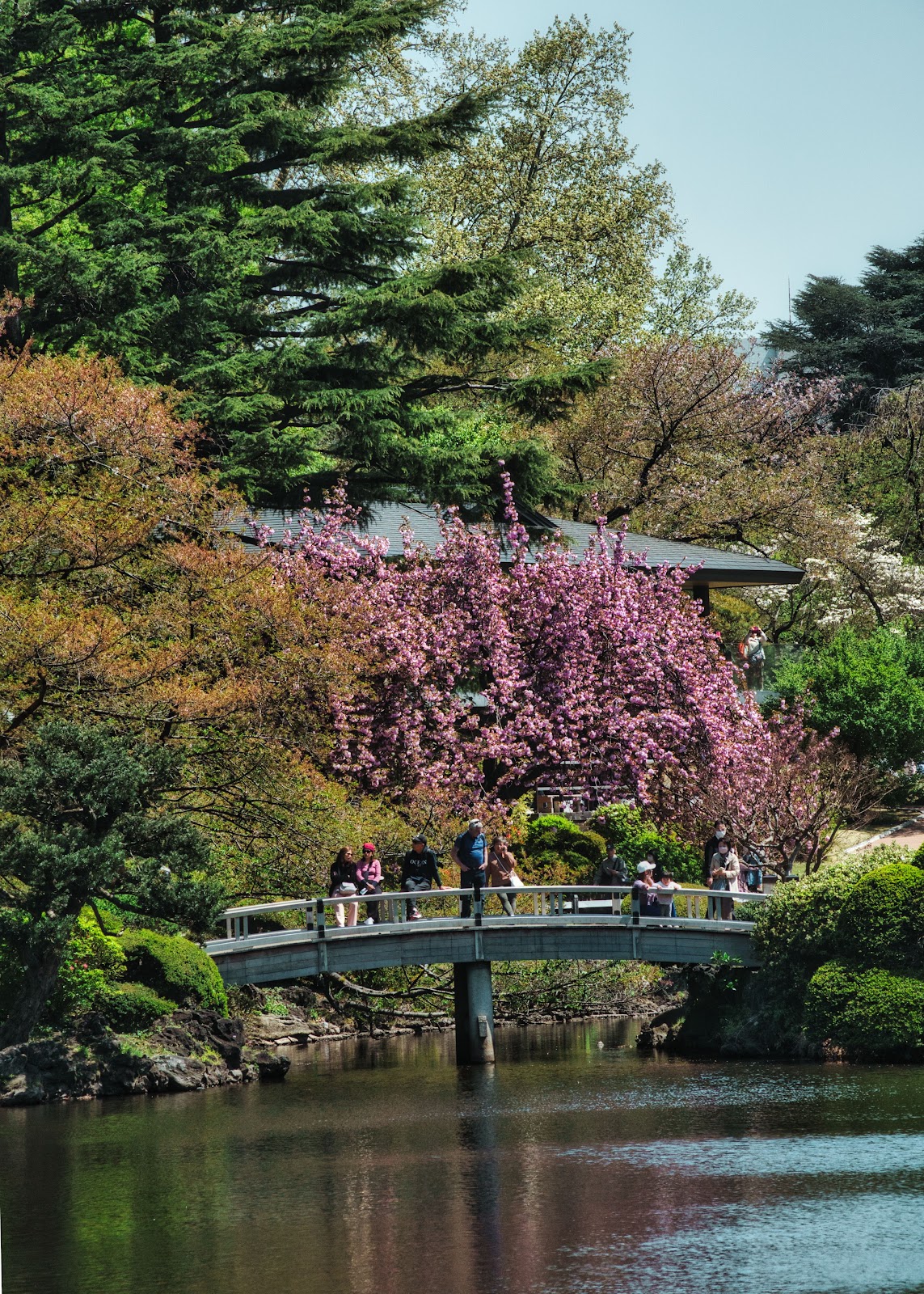
2. Kariya Park, Mississauga — A Pocket of Kyoto
One step through the wooden gatehouse, and the city exhales. The roar of Square One — the traffic, the hurry, the concrete — dissolves behind you like a bad dream. What replaces it: water. A still pond holding the sky. An arched bridge curving over it like a held breath. A waterfall murmuring secrets to the stones. Somewhere, a bell you cannot see but can almost hear. For one suspended hour, you are not in Mississauga. You are in Kyoto, and the only thing on your schedule is being here.
Kariya Park is a love letter between two cities. It honours Mississauga’s twin-city bond with Kariya, Japan, formalized in 1981, and when it opened in 1992, Canadian and Japanese planners shaped every stone and ripple together. The pavilion holds a bronze Friendship Bell, a gift from the city of Kariya itself. More than 65 cherry blossom trees line the paths, each one a promise that spring will come back. The park is small — you could cross it in minutes — but that’s the wisdom of it. Gardens like this aren’t for conquering. They’re for surrendering.
What to do there
Come in late April or early May, when the cherry blossoms detonate into pink clouds and petals drift across the pond like slow snow — the two most romantic weeks in the suburbs. Arrive early on weekends; the secret is out. The rest of the year, come to do gloriously little: sit by the water, watch the koi stitch the surface, and remember what quiet sounds like.
Good to know
Free to enter, open daily from 7 a.m. to 9 p.m. It’s moments from Square One, so let lunch in the city centre bookend your escape.
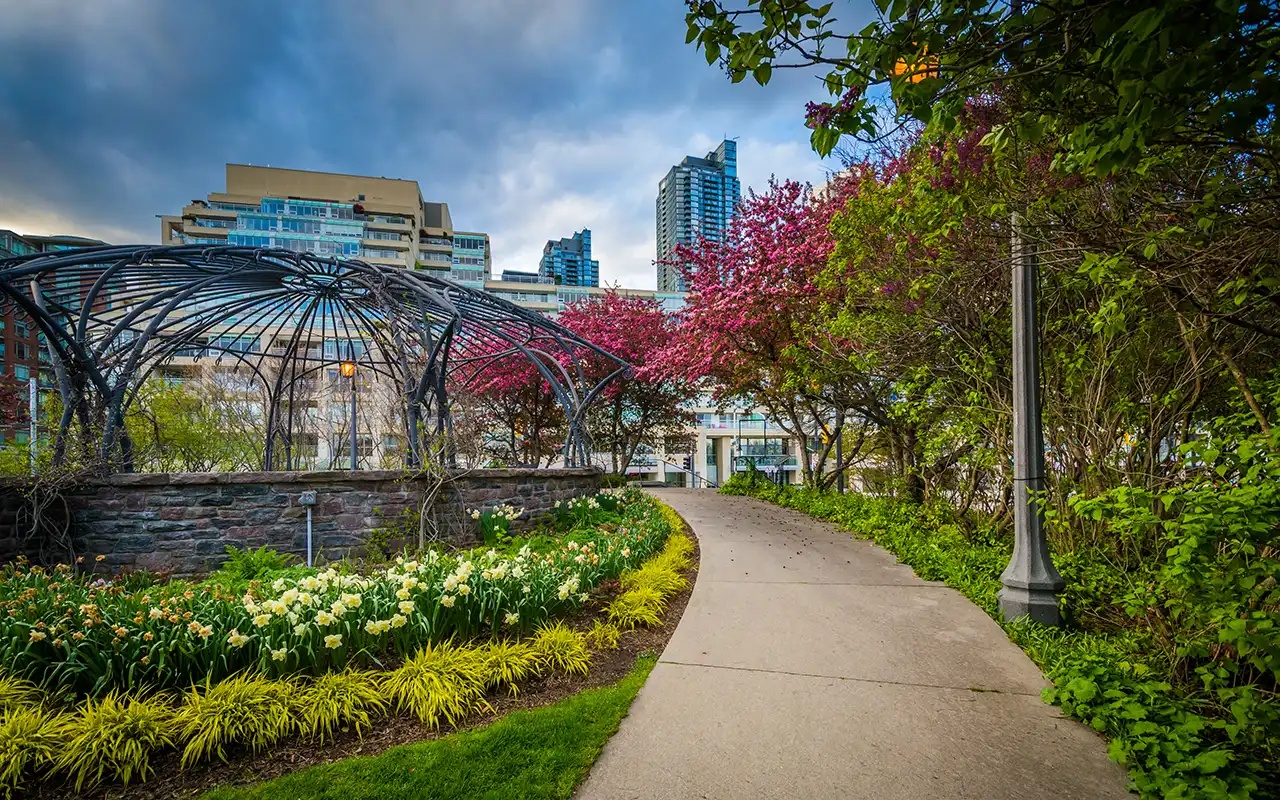
3. Toronto Music Garden, Harbourfront — A Symphony You Can Walk Through
Stand still in the riverscape and feel it: the grasses swirl the way a cello line swirls. Follow the path as it crescendos through a forest grove, then diminuendos down grass steps into an amphitheatre facing the open harbour. You haven’t heard a single note. And yet you’ve just walked through Bach.
This is the most poetic public space in Canada, and hardly anyone knows it’s here. Legendary cellist Yo-Yo Ma and landscape designer Julie Moir Messervy dreamed it together: a living, breathing interpretation of Bach’s First Suite for Unaccompanied Cello, planted at 479 Queens Quay West. Each of the suite’s six movements — Prelude, Allemande, Courante, Sarabande, Menuett, Gigue — becomes a garden “room,” from wildflower meadows to a stone-and-water finale. The steel arches of the Gigue pavilion catch the light like frozen music. Even if you’ve never heard the suite, your body understands it. That’s the genius.
What to do there
In summer, the garden sings for real. Summer Music in the Garden fills the amphitheatre with free concerts — Thursdays at 7 p.m., Sundays at 4 p.m. (June 21 to August 27 in 2026, the series’ 25th season), twenty performances spanning classical, jazz, Cuban rhythms, Persian fusion, and Japanese taiko drumming that you feel in your ribs. Bring a blanket, bring a picnic, bring everyone. Year-round, it’s the city’s loveliest place to sit with a coffee and watch the lake do its slow, silver thinking.
Good to know
Always free, open year-round. Concert seating is limited and Sunday afternoons fill fast — arrive early, stay late.
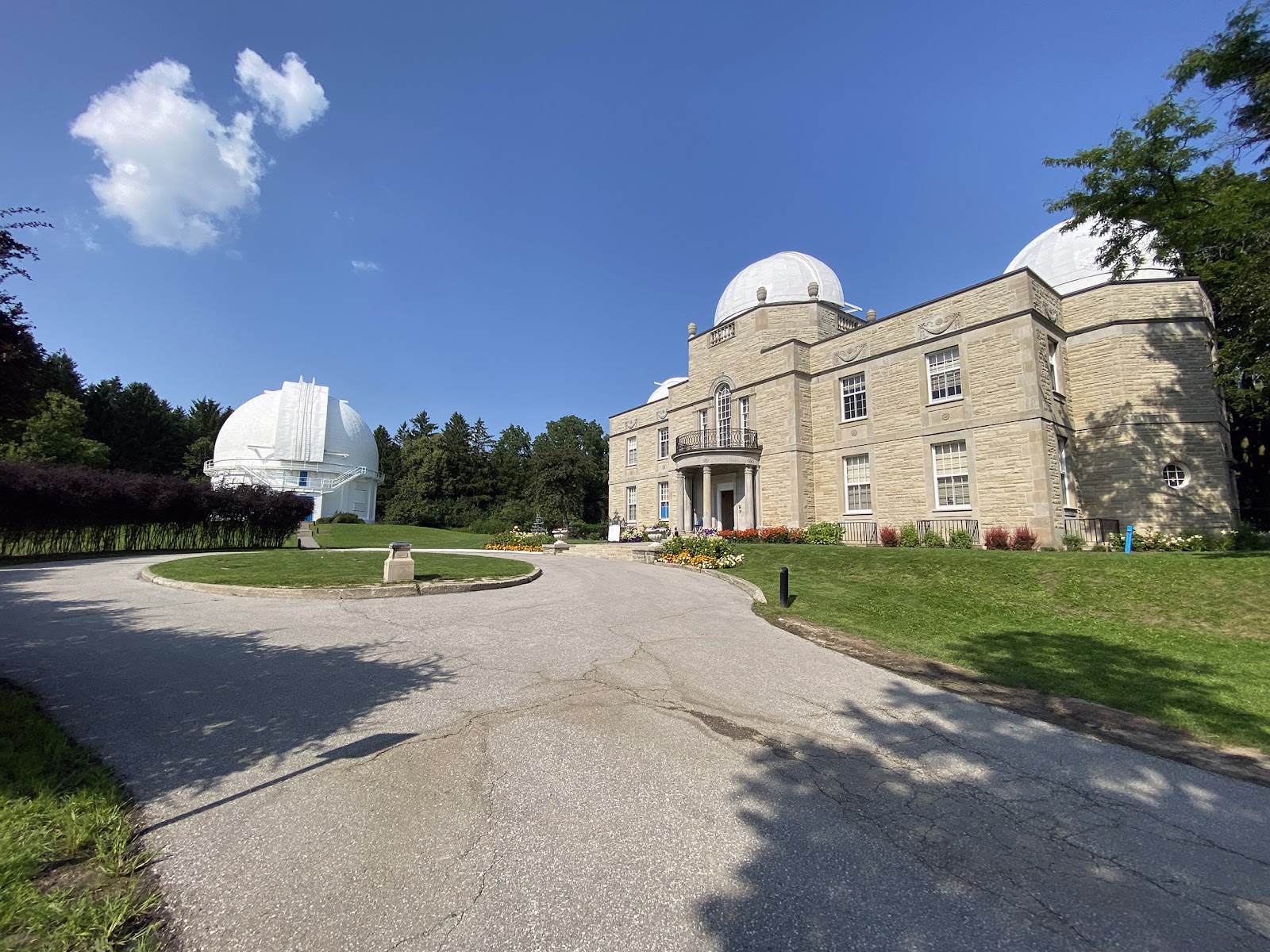
Photo: Canmenwalker (CC BY 4.0)
4. David Dunlap Observatory, Richmond Hill — Touch the Cosmos
The dome groans. It’s a low, mechanical thunder — 73 tonnes of steel rotating on its track — and then the slit of night opens above you like an eye. The telescope swings toward it, 21 metric tons of glass and hope, and suddenly Saturn is there: rings tilted like a hat, impossibly sharp, impossibly far, impossibly real. Your breath catches. Everyone’s does. In that moment, standing in a hushed white dome in Richmond Hill, you are as close to the infinite as a human being gets.
This is no museum piece. Opened in 1935, the David Dunlap Observatory was where Canadian astronomy grew up — and where, in 1972, astronomer Charles Thomas Bolton aimed the 74-inch reflector at Cygnus X-1 and identified the first black hole ever discovered. Let that land: the first black hole in human history was found from right here. The University of Toronto ran the observatory until 2008; today the City of Richmond Hill keeps it alive as a National Historic Site at 123 Hillsview Drive, its dome still opening to the same stars.
What to do there
Walk in for free self-guided tours of the Administration Building and the great Dome (fall hours: Saturdays and Sundays, 1–5 p.m., September 5 to October 25) — standing beneath that telescope costs nothing and feels like everything. The stargazing parties are free with no registration: bring binoculars, lie back on the lawn of Observatory Park, and let the RASC Toronto Centre astronomers hand you the universe. Summer brings evening tours, speaker nights, and family astronomy programs from May to October — register ahead, look up often.
Good to know
The park trails are free and open year-round — the grounds alone are worth the trip. The historic buildings are stairs-only, so plan accordingly. Stargazing is weather-dependent; check before you go, and dress warmer than you think.
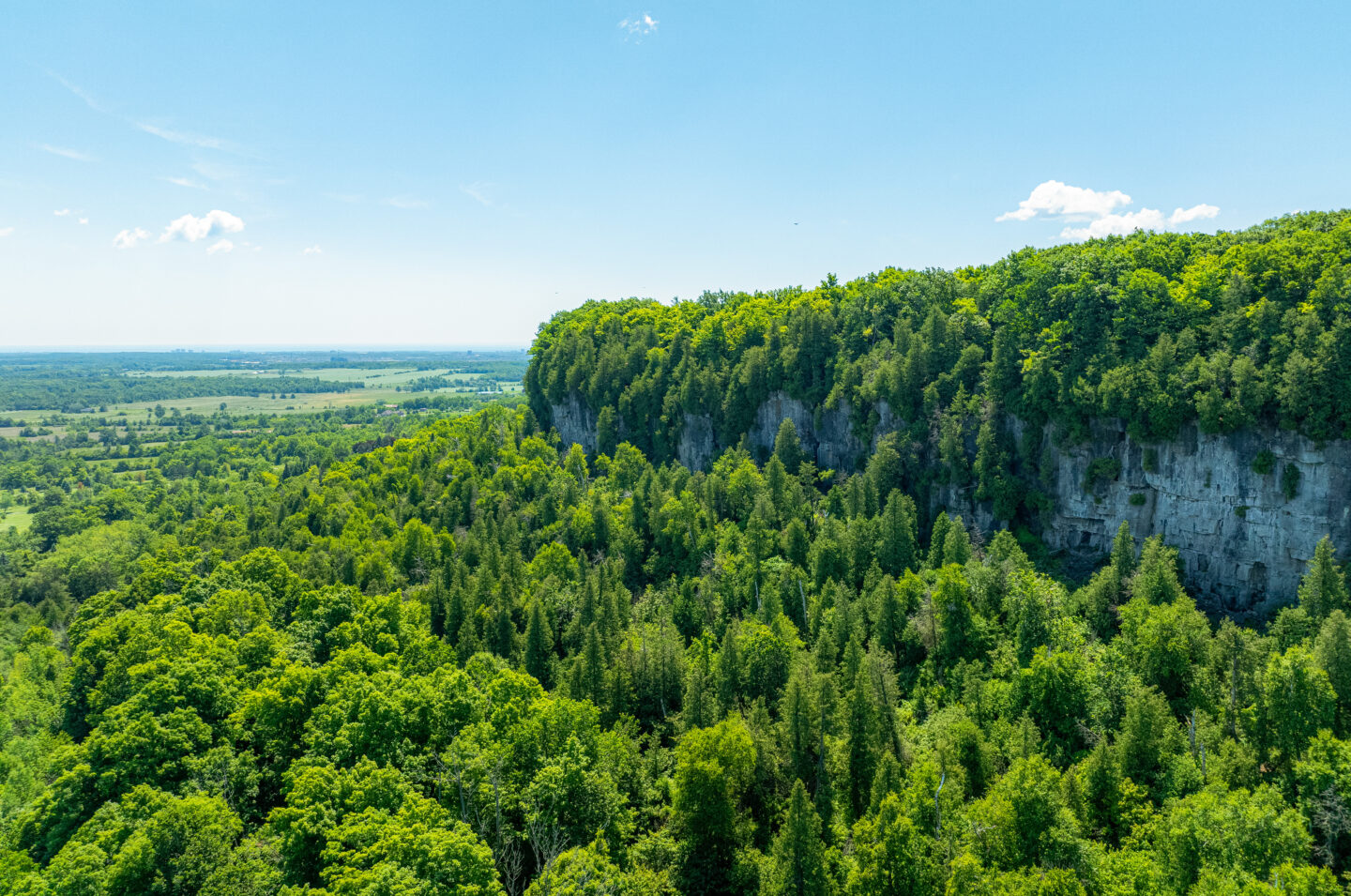
5. Mount Nemo, Burlington — Cliffs at the Edge of Deep Time
Step to the edge — carefully — and let the wind take your breath before the view does. Below you, the world drops away into green: farmland quilted to the horizon, the escarpment’s limestone face falling sheer at your feet. Above, turkey vultures ride the thermals in slow, lazy spirals, close enough to see their wingtips flex. And beside you, impossibly, a tree: an eastern white cedar, twisted and gnarled, roots sunk into a crack in the rock — a tree that was already old when Shakespeare was born. You are standing at the edge of deep time, and it is magnificent.
Mount Nemo is the Niagara Escarpment showing off. These cliffs have stood for hundreds of millions of years, and the ancient cedars clinging to them — some more than 1,000 years old — are among the oldest living things in eastern North America. They survive where nothing else can, rooted in limestone fissures, drinking fog. Five kilometres of trails trace the escarpment edge past cliffs, crags, and caves, the white blazes of the Bruce Trail marking your way. Conservation Halton guards this fragile cliff-edge world, where rare plants and animals thrive in numbers you can barely count.
What to do there
Hike the escarpment-edge loops and let every lookout stop you cold — the Brock Harris Lookout is the showstopper. Climbers: the rock faces are yours on established routes, vertigo included free of charge. Come in October, when fall fire sets the limestone cliffs ablaze with colour (but come early — the secret’s out on weekends). Bring binoculars for the vultures, and a camera, because the views run all the way to the Toronto skyline on a clear day.
Good to know
Reservations aren’t required but are recommended — booking online at conservationhalton.ca holds your spot and saves on gate fees. Open daily 8:30 a.m. to 9 p.m. at 5317 Guelph Line, Burlington. Stay on the marked trails: the cliff edges are fragile, and the rare wildflowers at your feet took centuries to get there.
Know a hidden gem we missed? The Weekenders is built by the community, for the community. Share your secret spot on our Share Your Tips page — the best reader tips get featured as Community Picks, with credit to you.
Leave a Reply